
Camden is one of London's most dynamic boroughs, home to 218,000 residents and the second-highest concentration of businesses in London (approx. 37,000).
It hosts the "Knowledge Quarter"—a world-leading hub containing Google's HQ, The British Library, and the Francis Crick Institute—alongside historic residential communities. This density creates a unique challenge: How do you ensure the borough's immense economic growth is felt by the people who live there?
To address this, the Council launched the Camden Community Wealth Fund, a £30m initiative to invest in local businesses that deliver social value. But this created a strategic risk: If the fund invested in businesses that residents didn't feel connected to, it would fail its mission of inclusive growth.
Camden convened the Diversity Panel—a representative group of residents, workers, and students—to co-design the fund's approach. They needed a mandate from the community that was unified, not divided.
The Question: "What impact should businesses have?"
The Council needed to move beyond generic feedback. They posed a direct, challenging prompt to the panel:
"As someone who lives, works or studies in Camden... how could businesses help change your area for the best?"
The concern was that this question could highlight a conflict between the priorities of local businesses and residents. Camden needed a process that would prevent polarisation and instead find the consensus.
PSi: Structured Deliberation
To manage this complexity, they moved beyond standard surveys and used PSi's Iterative Deliberation Process to guide the Diversity Panel through a structured journey.
Unlike a comment section, on PSi participants are guided through four mandatory stages:
- Review: Participants read ideas from peers they didn't know (breaking echo chambers).
- Discuss: They entered small breakout rooms to debate the merits of those ideas with other participants.
- Vote: Only after debating did they cast their final votes.
- Refine: This data fed directly into the strategy that would guide the fund's future decisions.
By encouraging participants to engage with opposing views before voting, the process naturally dampened extreme voices and amplified shared priorities—giving the Council the robust evidence they needed to proceed.
The Outcome: Verifying Consensus with Data
Instead of relying on assumptions, PSi provided the empirical evidence needed to verify alignment.
- Visual Verification: The alignment maps revealed that business owners (stars) and residents (circles) were consistently found together in the same voting clusters.
- Statistical Confidence: A Chi-Squared test confirmed no significant divide in voting patterns between the 65 participating business owners and the resident group.
Had a divide existed, the platform would have flagged specific points of friction, allowing the Council to adjust their strategy. Instead, the data confirmed that business owners and residents were aligned on the same priorities.
Evidence: PSi's Participant Alignment Map
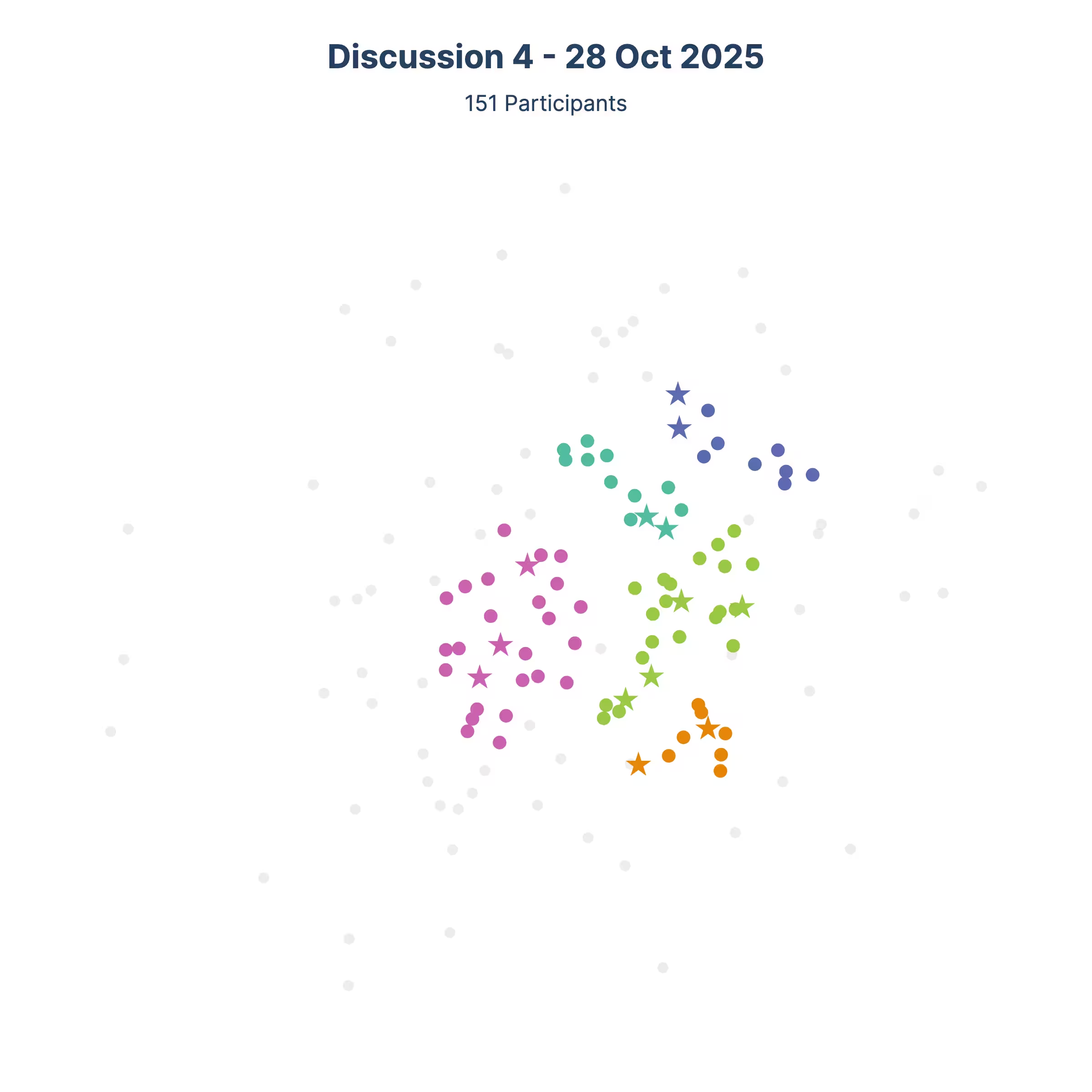
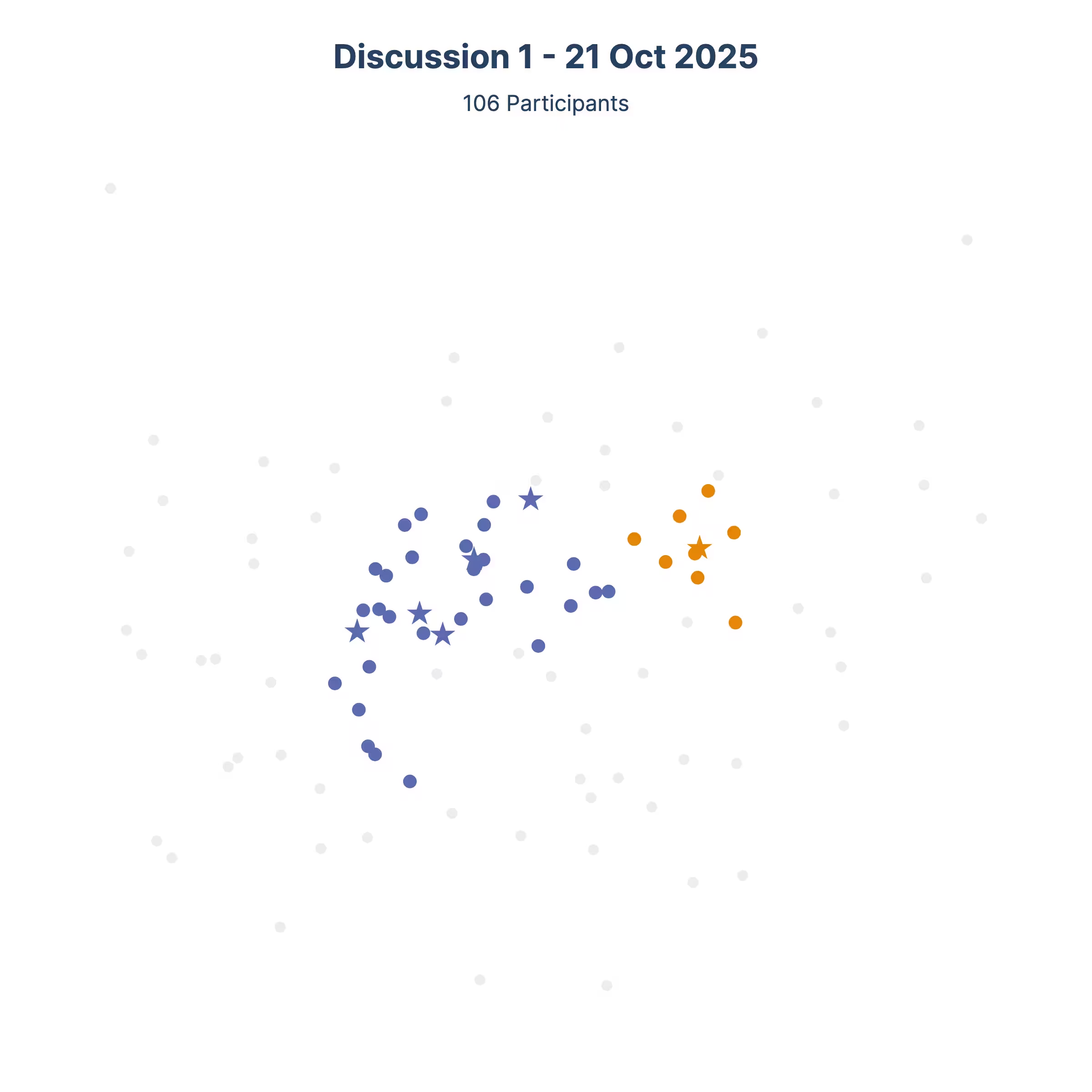
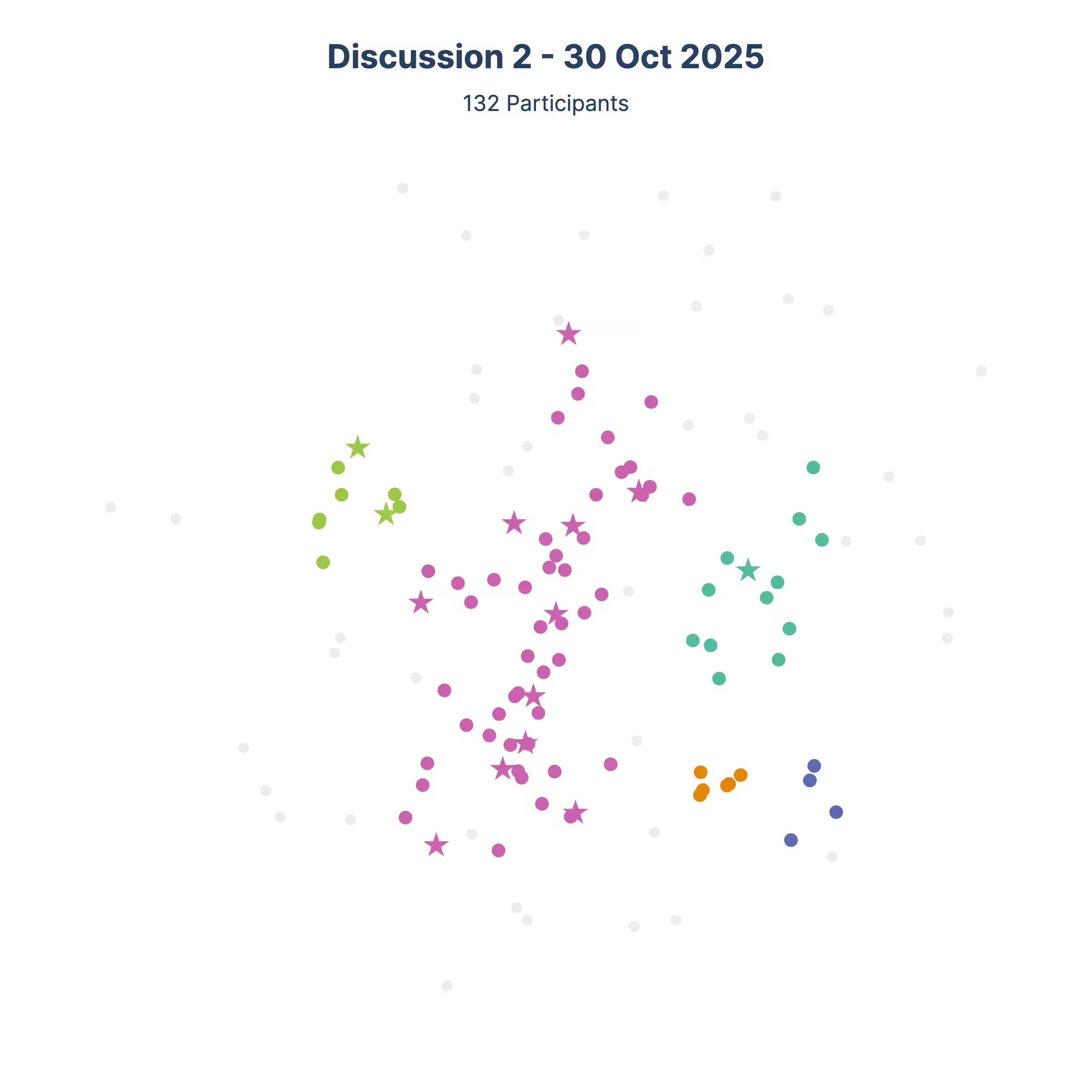
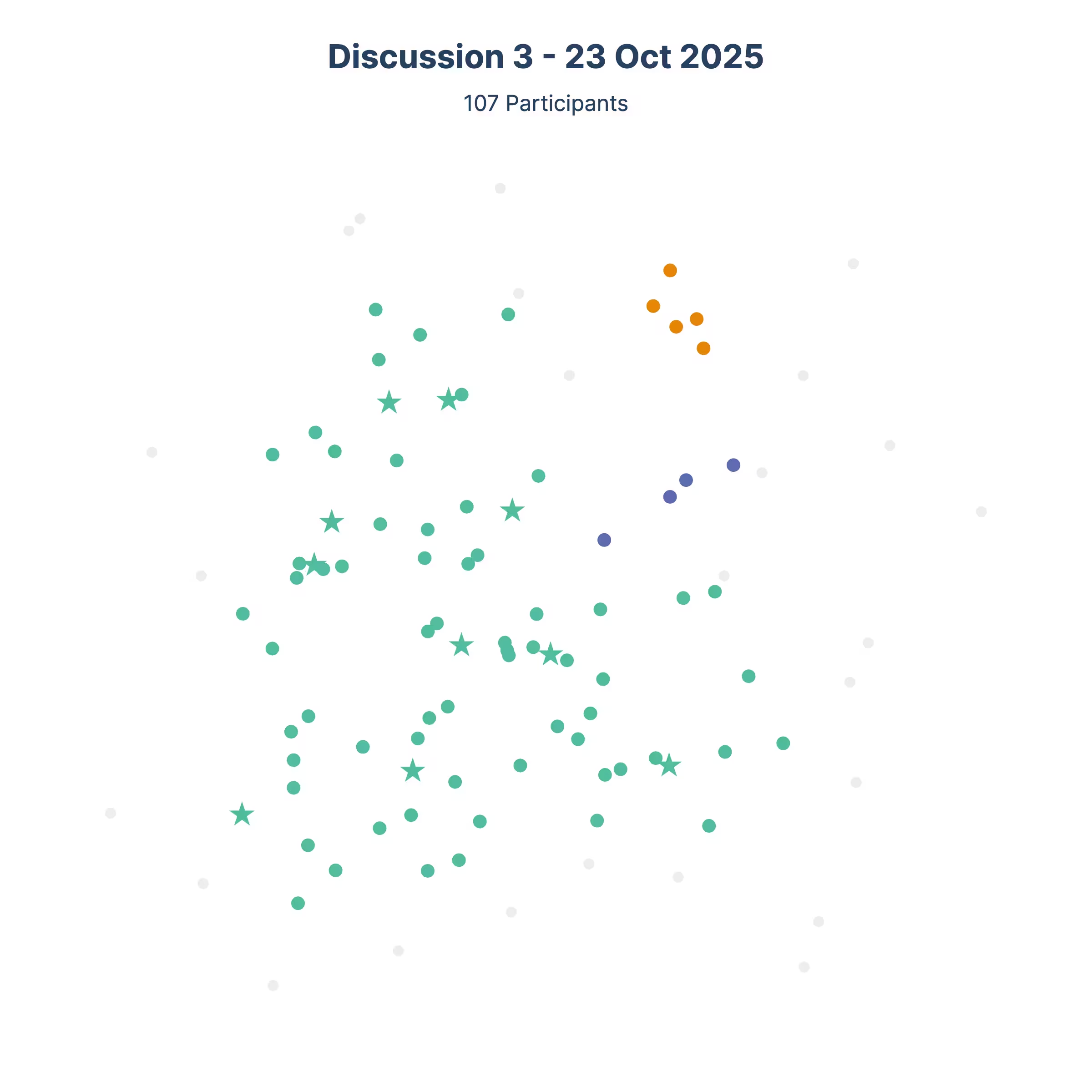
Figure 1: PSi Platform Output (4 Discussions)
The visualisation is automatically generated by PSi's analysis engine. It maps every participant based on their unique voting signature.
What you are seeing: Each dot represents a real person. The platform groups participants who voted similarly into coloured "opinion clusters."
The breakdown:
- Stars = Business Owners
- Circles = Residents
The Insight: Note how the stars and circles are distributed throughout the clusters, rather than separated. This visualises the high degree of alignment between the two groups.
Deeper Insight: Protecting Niche Voices
While the majority showed broad alignment, the platform's segmentation engine also identified small, distinct "resident-only" clusters.
Standard surveys often drown out these smaller groups by averaging the data. PSi preserved them. Analysis showed these groups were not "anti-business"; they were focused on specific, hyper-local issues that the broader group hadn't prioritised.
The Value: This ensured the Investment Strategy could be broad enough to capture the consensus, but targeted enough to address specific community needs that might otherwise have been missed.
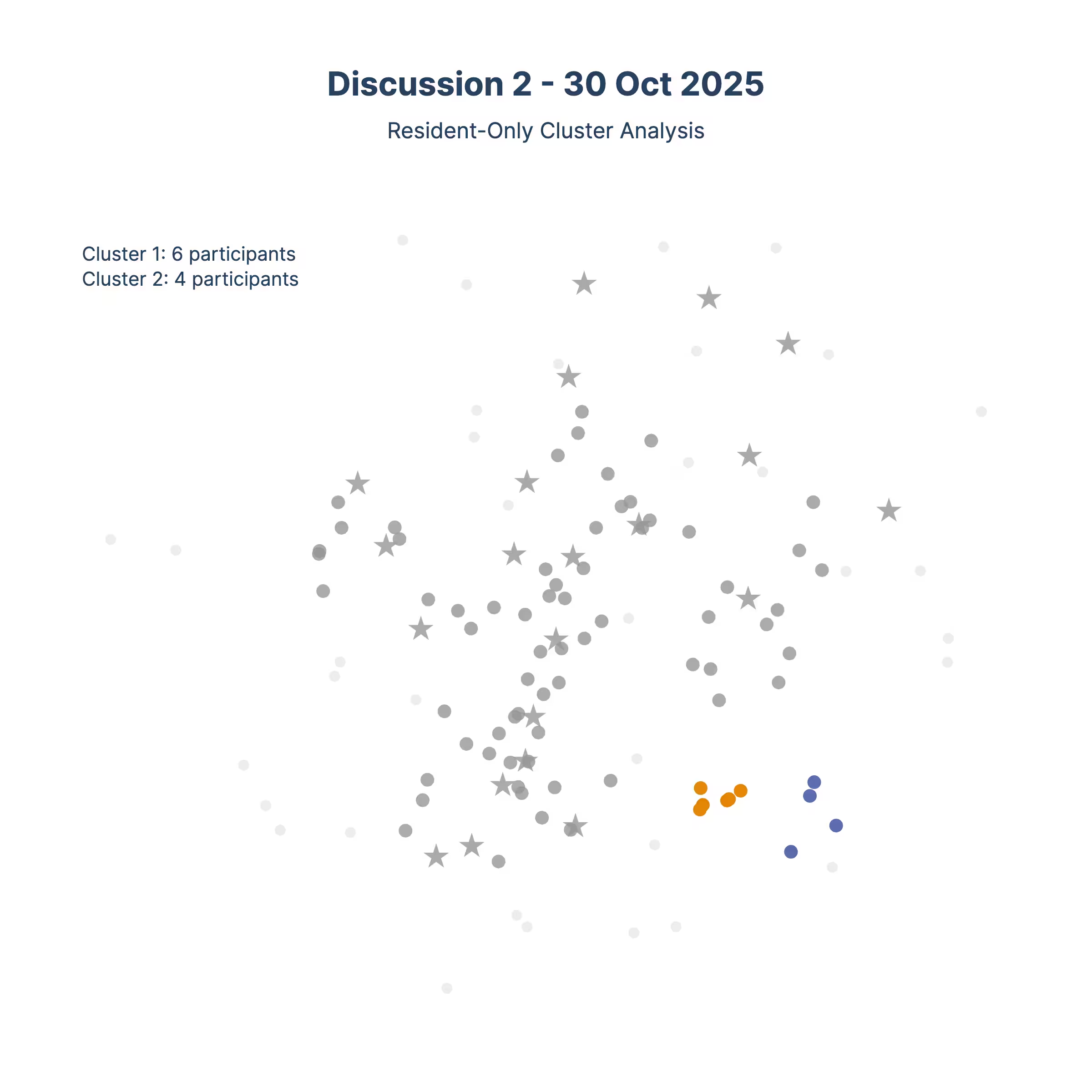
Discussion 2: Skills and Safety
Cluster 1: This group voted significantly higher for youth advancement opportunities. They strongly supported "Learning and gaining skills" (+4.0***) and "Business mentorship" (+2.3*) compared to the discussion average.
Cluster 2: Notably, this group also showed lower support for the broad idea "#SustainableJobs" (-1.3*).
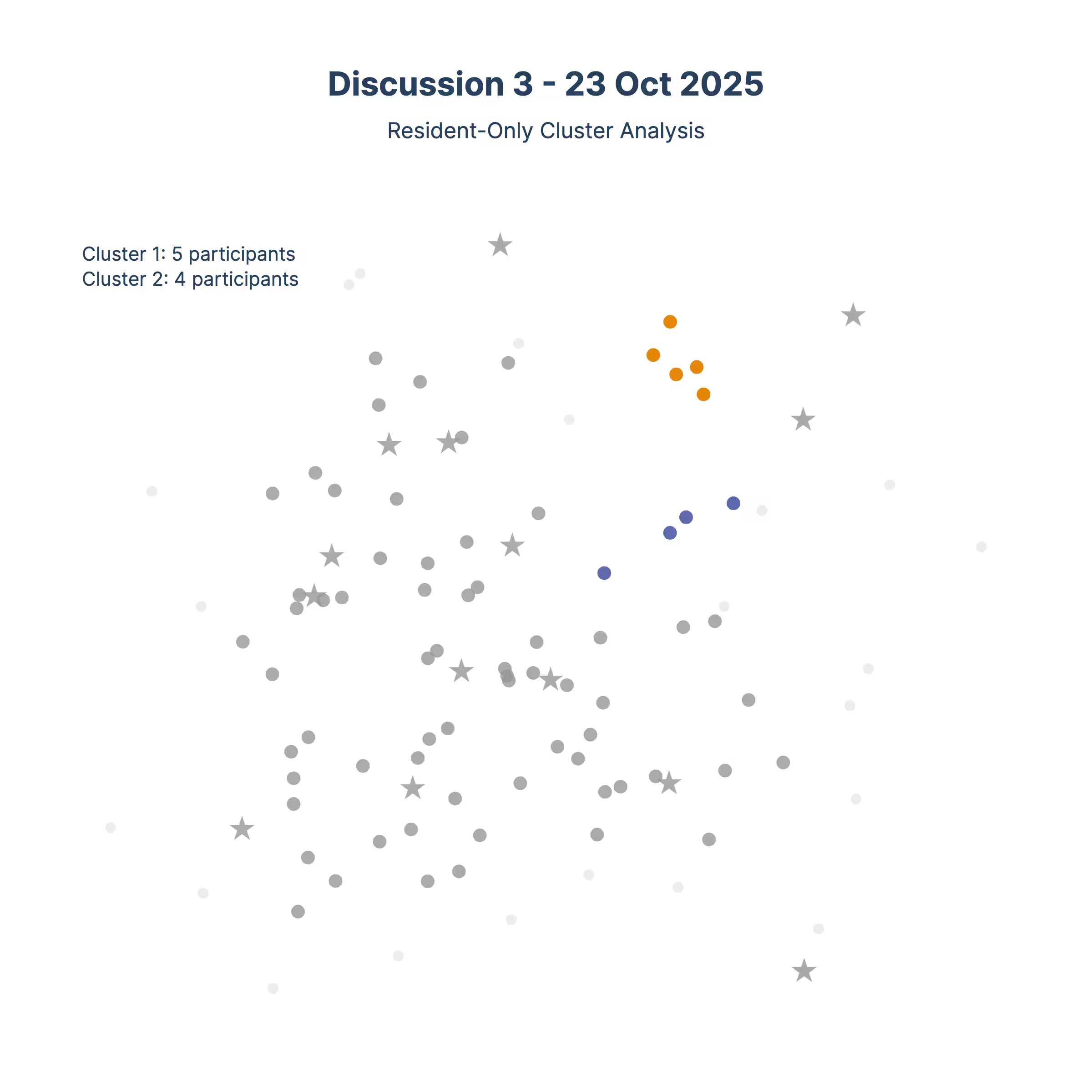
Discussion 3: Community Benefit
Cluster 1: These residents prioritised direct improvements to their surroundings, favouring "Invest in community spaces" (+2.0*).
Cluster 2: These residents supported "Work Local: A Council Initiative for Local Jobs and Apprenticeships" less than other people did (-0.9*).
The Strategic Value: You don't have to choose sides
Local councils often worry that supporting businesses means ignoring residents. This project showed that doesn't have to be the case. By using a process that encourages people to discuss ideas rather than just vote on them, we were able to find the common ground that standard surveys often miss.
Conclusion
Camden Council needed to run a difficult conversation without dividing their community. By using PSi to dig deeper into the data, they found that business owners and residents actually wanted many of the same things. This gave the Council the evidence they needed to build a strategy that works for everyone—based on facts, not guesswork.