Book a demo
Analysis

Turn public conversations into decision-ready insight

PSi helps public sector teams understand what people support, where they disagree, and why. After every discussion, we analyse the votes, ideas and conversation data so you can make decisions with more confidence.

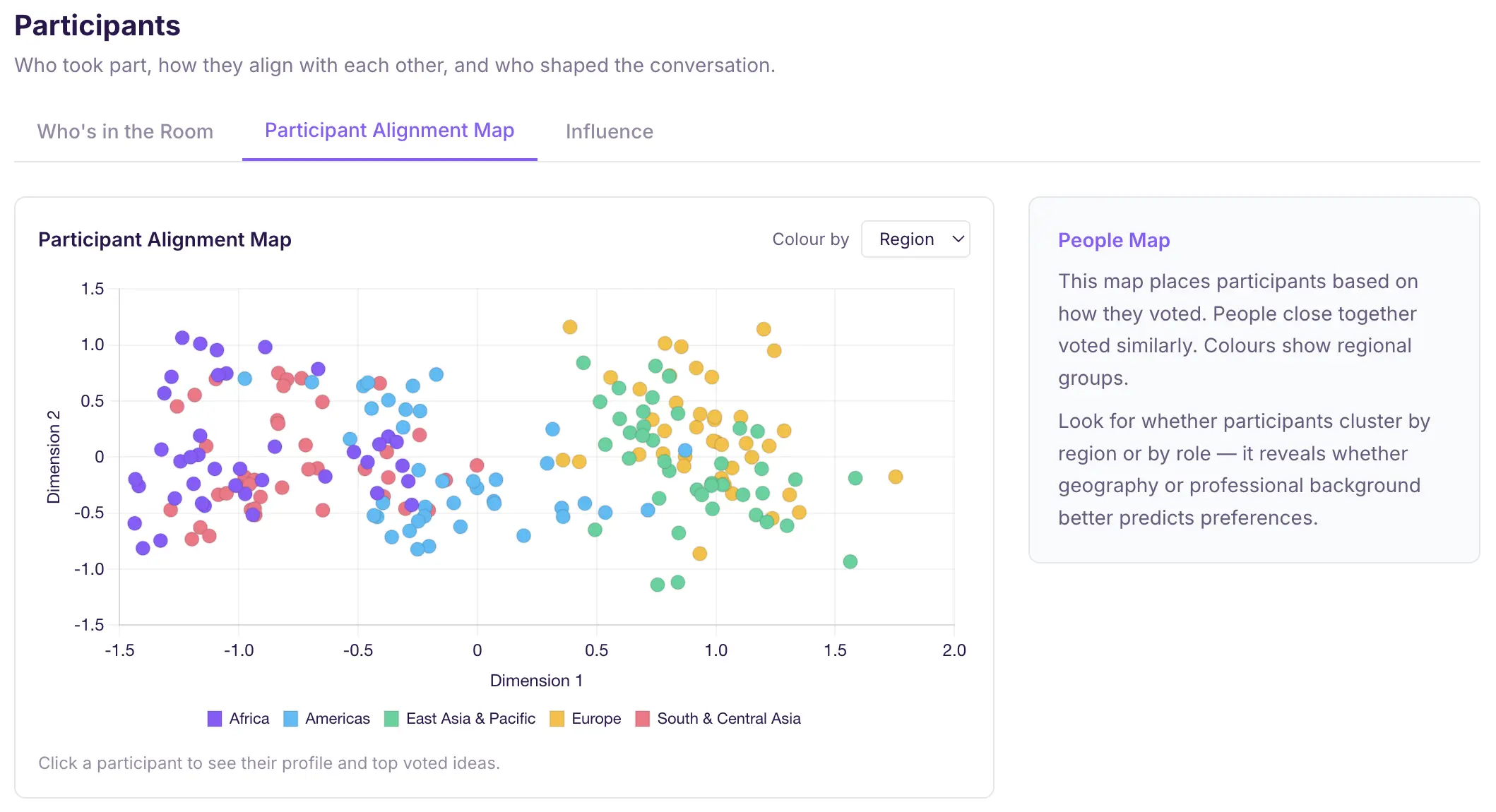
Illustration of the PSi analysis output

What PSi analysis includes

Participation and reach

Who took part, how active they were, and the make-up of attendees across the questions you chose to ask at sign-up.

Outputs: participation and engagement metrics, polarisation, voting activity rates, breakdowns of who took part by any demographic, attitudinal or stakeholder attribute you collected.
Ideas and priorities

Which ideas attracted the most support, how ideas relate to each other in meaning and co-support, and how their standing changed across discussion rounds.

Outputs: ranked ideas with vote totals, idea map of semantically similar ideas, idea co-support network, round-by-round ranking trajectories.

Groups and differences

How different groups voted differently, which of your survey attributes explain the most variation in views, and which differences are statistically meaningful.

Outputs: segment-vs-everyone-else comparisons, head-to-head group comparisons, variable importance rankings across the attributes you collected, confidence intervals and significance tests.

Prediction and hidden support

What the data suggests might have happened if every participant had seen every idea, or if ideas were judged on their wording alone.

Outputs: predicted rankings from collaborative filtering, observed-vs-predicted rank shifts, wording-based reward scores with rank uncertainty.

Arguments and evidence

What participants actually said in support and concern, the recurring pros and cons for each idea, and the transcript moments those findings come from.

Outputs: clustered pros and cons per idea, supporting transcript excerpts, sentiment by table and over time, named entities and topics mentioned.

From live discussion to usable evidence

A simple four-step flow from the live conversation to evidence your team can use in public decision-making.

  1. People take part

    Participants join a live online discussion, share ideas, respond to others and show what they support.

  2. PSi structures the data

    We bring together votes, ideas, participant information and conversation transcripts in one analysis process.

  3. We analyse the patterns

    Our analysis shows what rose to the top, where groups differed, and what people said in support or concern.

  4. You receive clear findings

    You get insight that can be used in reports, briefings, recommendations and public decision-making.

Analysis you can explain

Public sector decisions need more than fast summaries. They need analysis that is careful, transparent and proportionate.

PSi combines data science with human interpretation. We use models to find patterns, but we keep the reasoning visible. Findings are checked, caveated and connected back to the original public input.

Responsible by design

  • We protect participant privacy.
  • We check for representation gaps.
  • We explain methods in plain language.
  • We keep humans accountable for interpretation.

Try the analysis for yourself

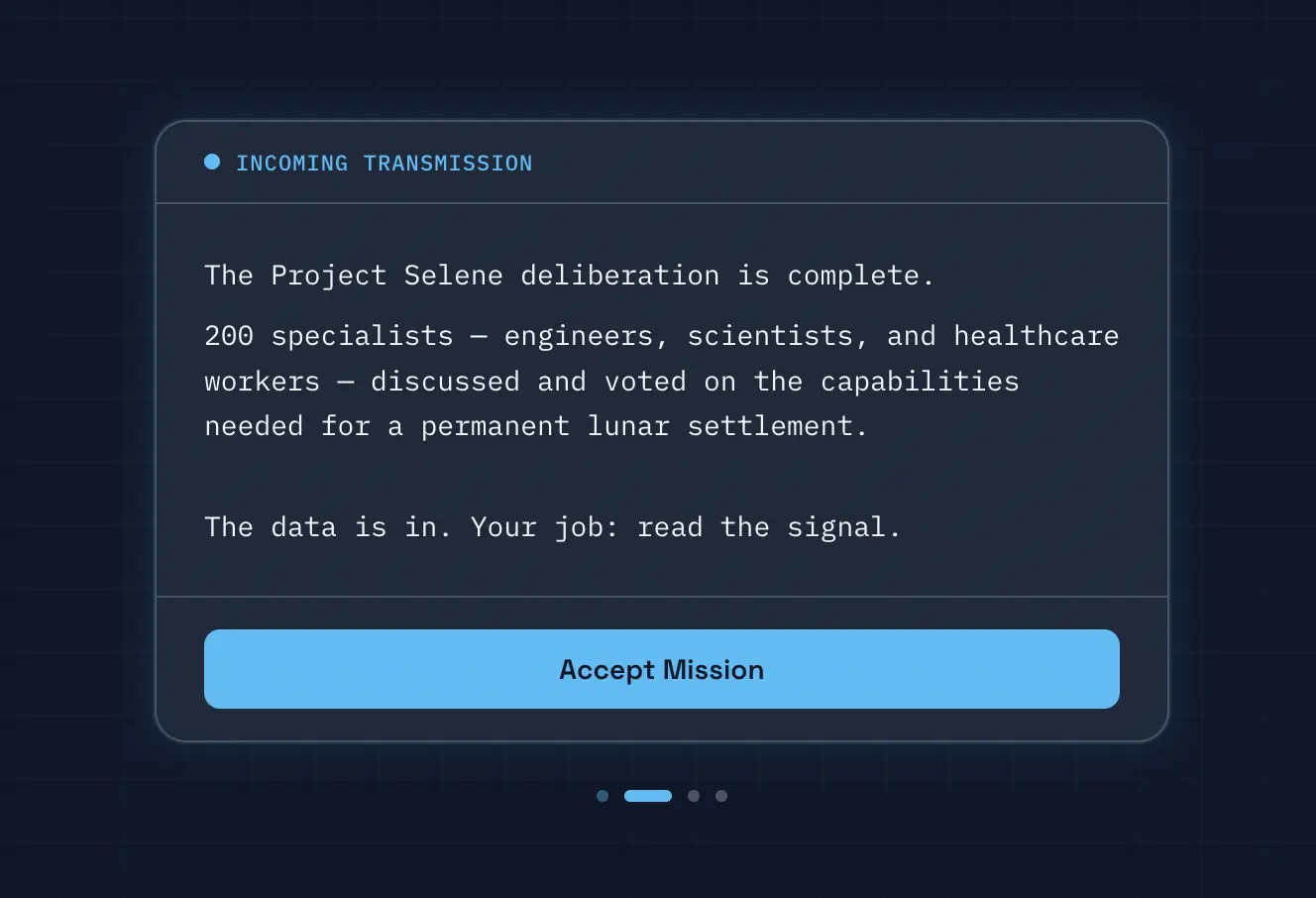
The PSi simulation game: The Analysis Workstation lets you explore a fictional public deliberation and see how PSi turns discussion data into insight.

Play the analysis game
The Analysis Workstation — chapter overview screenshot